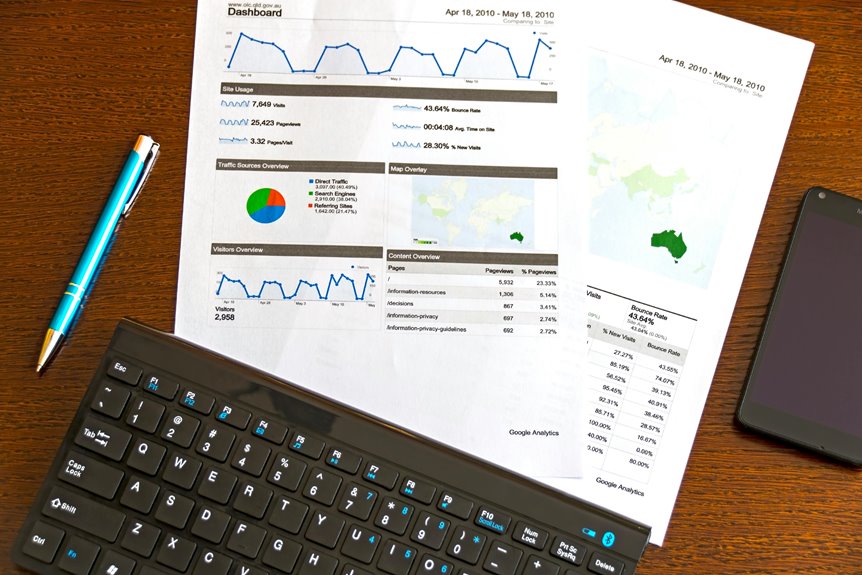

The Global Enterprise Dashboard represents a critical tool for organizations aiming to synthesize extensive datasets. With identifiers like 458727300 and 923291709, it showcases the platform’s capacity for real-time analytics. Metrics such as 2676090120 and 18663767601 offer insights into emerging trends. The focus on user engagement and data integrity, highlighted by 1133405660 and 2062585309, suggests a structured approach to collaboration. This raises questions about the future implications of such dashboards on strategic decision-making.
Understanding Global Enterprise Dashboards
Global enterprise dashboards serve as critical tools for organizations striving to synthesize vast amounts of data into actionable insights.
By employing advanced data integration techniques, these dashboards enable seamless aggregation of information from diverse sources.
Furthermore, visualization tools facilitate intuitive representation of complex datasets, allowing users to identify trends and make informed decisions.
This clarity empowers organizations to enhance operational efficiency and strategic planning.
Key Metrics and Their Importance
When organizations focus on key metrics, they gain critical insights that drive performance and strategic objectives.
Key performance indicators (KPIs) linked through data integration facilitate informed decision-making. Understanding these metrics allows enterprises to:
- Measure operational efficiency
- Align goals with performance
- Identify growth opportunities
- Enhance resource allocation
- Assess market competitiveness
These insights empower organizations to navigate complexities and achieve their desired outcomes.
Benefits of Real-Time Data Visualization
Real-time data visualization significantly enhances decision-making speed by providing immediate access to critical information, allowing stakeholders to respond promptly to changing conditions.
Additionally, it fosters improved operational efficiency by identifying bottlenecks and optimizing processes through instant feedback.
These benefits underscore the importance of integrating real-time data visualization into global enterprise dashboards.
Enhanced Decision-Making Speed
Although traditional data analysis often involved delays due to manual processing and report generation, the advent of real-time data visualization has fundamentally transformed decision-making speed within organizations.
By enabling rapid analysis, stakeholders can leverage data-driven insights effectively.
Key benefits include:
- Immediate access to data
- Enhanced situational awareness
- Informed decision-making
- Reduced response times
- Increased competitive advantage
Improved Operational Efficiency
Harnessing the power of real-time data visualization significantly enhances operational efficiency across various sectors.
This technology facilitates process optimization by identifying bottlenecks and enabling immediate corrective actions. Moreover, it improves resource allocation by providing insights into utilization patterns, ensuring that assets are deployed effectively.
Ultimately, organizations can achieve greater productivity and responsiveness, aligning operational capabilities with strategic objectives while maintaining a focus on freedom and adaptability.
Enhancing Decision-Making Processes
As organizations increasingly rely on data-driven insights, the enhancement of decision-making processes becomes paramount for achieving strategic objectives.
Key components for improvement include:
- Ensuring data integrity for reliable analysis
- Promoting user engagement to foster collaboration
- Leveraging analytics for predictive insights
- Streamlining information dissemination across departments
- Integrating feedback loops for continuous improvement
These strategies empower leaders to make informed choices, driving organizational success.
Implementing a Global Enterprise Dashboard
The implementation of a Global Enterprise Dashboard represents a strategic initiative that can transform how organizations visualize and interact with their data.
Successful dashboard integration requires a comprehensive approach, encompassing data unification and real-time analytics.
Additionally, effective user training is essential, ensuring that employees can leverage the dashboard’s features to promote informed decision-making and enhance operational efficiency across diverse organizational levels.
Future Trends in Data Analytics
While organizations increasingly rely on data-driven insights to guide strategic decisions, emerging trends in data analytics are reshaping the landscape of how data is collected, processed, and interpreted.
Key future trends include:
- Enhanced predictive analytics capabilities
- Integration of machine learning algorithms
- Real-time data processing
- Increased focus on data privacy
- Adoption of advanced visualization tools
These trends will empower organizations to leverage data more effectively.
Conclusion
In conclusion, the Global Enterprise Dashboard stands as a cornerstone for integrating data, fostering collaboration, and enhancing decision-making. By harnessing real-time analytics, embracing user engagement, and upholding data integrity, organizations can navigate complexities with precision. As industries evolve, the continuous adaptation of these dashboards will drive innovation, streamline processes, and unveil growth opportunities. Ultimately, the effective implementation of such platforms not only empowers businesses today but also positions them for success in the data-driven future.


 By
By



 By
By