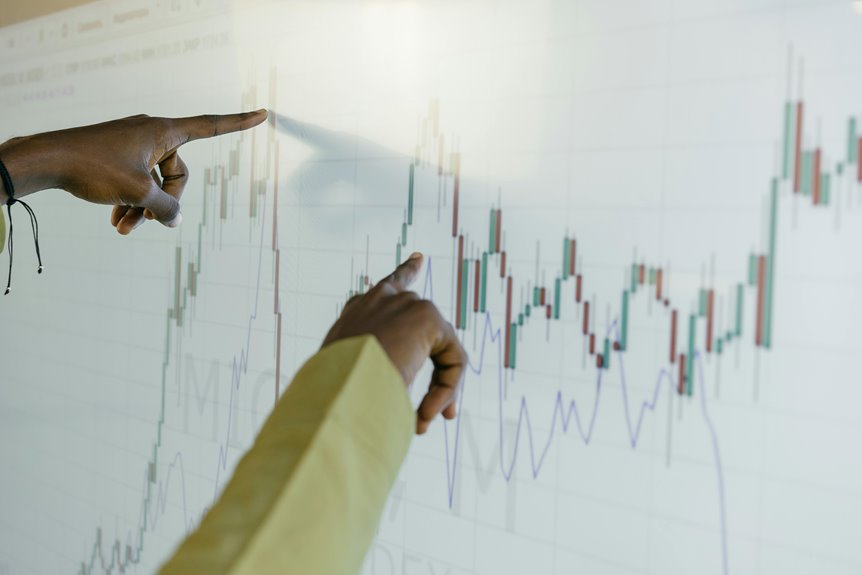

The Economic Dynamics & Forecast Review provides a critical analysis of key economic indicators, including growth rates, inflation, and employment trends. These data points reveal significant insights into market resilience and consumer behavior. Understanding these dynamics is essential for businesses and policymakers navigating uncertainty. As various sectors respond to evolving economic conditions, the implications for investment strategies become increasingly complex. What patterns emerge, and how can stakeholders effectively adapt to this landscape?
Overview of Economic Indicators
Although economic indicators are often viewed as mere numbers, they serve as critical tools for understanding the overall health of an economy.
Economic growth, inflation rates, and employment trends reflect the dynamic nature of consumer spending and trade balances.
Additionally, interest rates influence productivity levels and wage growth, offering insights into the economy’s resilience and capacity for sustainable development.
Sector Analysis of Data Points
The sector analysis of data points reveals significant insights into performance trends across various economic indicators.
Recent data highlights fluctuations in key sectors, providing a clearer understanding of underlying economic conditions.
Sector Performance Insights
As various sectors navigate the complexities of the current economic landscape, a detailed analysis reveals distinct performance trends that merit attention.
Recent data indicates varying sector growth rates influenced by market segmentation strategies. Industries that effectively adapt to consumer preferences and emerging technologies demonstrate resilience, while others lag.
Such insights underline the importance of targeted approaches in maximizing opportunities within the evolving economic framework.
Trends in Economic Indicators
While economic indicators serve as critical barometers for assessing sector performance, recent trends reveal significant disparities among industries.
Economic cycles exhibit varying GDP growth rates, influenced by inflation trends and fluctuating consumer spending. Unemployment rates remain inconsistent, impacted by monetary and fiscal policies.
Additionally, trade balances and interest rates play pivotal roles in wealth distribution, underscoring the complexity of current economic dynamics.
Trends and Patterns in Financial Markets
The financial markets exhibit distinct trends and patterns influenced by various factors such as market volatility, evolving investment strategies, and economic indicators.
An analysis of market volatility reveals significant fluctuations that can impact investor behavior and asset allocation decisions.
Additionally, the relationship between economic indicators and market performance underscores the importance of data-driven investment strategies in navigating these trends.
Market Volatility Analysis
How do fluctuations in market sentiment shape financial landscapes?
Market volatility emerges from a complex interplay of investor psychology and external economic shocks, influencing trading strategies and risk assessment.
Understanding behavioral finance is crucial for developing effective hedge strategies and liquidity measures during market corrections.
- Impact of price volatility on investment decisions
- Role of risk assessment in trading strategies
- Behavioral finance insights into market fluctuations
Investment Strategies Evolution
Evolution in investment strategies reflects a dynamic response to shifting market conditions and technological advancements. Investors increasingly prioritize sustainable investing and diversify portfolios with alternative assets, adapting to global challenges and consumer preferences. This strategic shift enhances resilience and offers potential for long-term growth.
| Strategy Type | Description |
|---|---|
| Traditional Investing | Focus on stocks and bonds |
| Sustainable Investing | Prioritizes ESG factors |
| Alternative Assets | Includes real estate, crypto |
| Quantitative Strategies | Data-driven algorithms |
| Impact Investing | Aims for social/environmental change |
Economic Indicators Impact
Economic indicators serve as crucial barometers for assessing trends and patterns within financial markets, providing insights into the overall health of an economy.
Key aspects include:
- Economic growth and its correlation with consumer spending
- Inflation rates impacting interest rates and trade balances
- Employment trends influencing market confidence and fiscal policies
Understanding these indicators enables stakeholders to navigate complex financial landscapes effectively.
Implications for Businesses and Policymakers
As the landscape of global markets continues to shift, businesses and policymakers must navigate a complex array of economic indicators and trends that significantly impact decision-making processes.
Business adaptability is crucial in responding to these shifts, while policy responsiveness ensures effective governance.
Together, these elements foster an environment where innovation thrives, ultimately enhancing resilience and promoting sustainable growth in uncertain economic climates.
Consumer Behavior and Economic Sentiment
Understanding consumer behavior and economic sentiment is critical for anticipating market trends and shaping effective business strategies.
- Consumer confidence influences purchasing power and spending habits.
- Behavioral economics provides insights into decision-making factors and market psychology.
- Sentiment analysis reveals consumer trends and economic optimism.
These elements collectively shape the landscape of financial literacy and impact future economic dynamics.
Future Projections and Strategic Insights
Consumer behavior and economic sentiment serve as indicators for market trends, providing a foundation for future projections and strategic insights. Strategic forecasting emphasizes economic resilience amidst fluctuating markets. The following table summarizes key factors influencing future economic scenarios:
| Factor | Impact Level |
|---|---|
| Consumer Spending | High |
| Investment Trends | Medium |
| Employment Rates | High |
| Inflation Expectations | Medium |
| Global Economic Events | High |
Conclusion
In conclusion, the Economic Dynamics & Forecast Review serves as a compass for navigating the complexities of the current economic landscape, much like a lighthouse guiding ships through turbulent waters. By analyzing key indicators and trends, businesses and policymakers can better anticipate market fluctuations and adapt their strategies accordingly. Understanding consumer behavior and sentiment is paramount for fostering resilience and innovation, ultimately ensuring sustainable growth in an ever-evolving economic environment.


 By
By



 By
By