
The “Business Intelligence & Forecast Report” identifies critical trends shaping the industry landscape. By analyzing data associated with the specified identifiers, organizations can gain insights into market dynamics and consumer behavior. This report highlights the significance of real-time reporting and data governance in achieving operational efficiency. As businesses face evolving challenges, understanding these elements becomes essential. However, the implications of these findings extend beyond mere analysis, raising questions about strategic adaptation and future growth.
Overview of Business Intelligence Trends
As organizations increasingly rely on data-driven decision-making, the landscape of business intelligence (BI) continues to evolve rapidly.
Trends such as data visualization, predictive analytics, and machine learning enhance user engagement while enabling real-time reporting.
Cloud computing fosters business agility, allowing firms to leverage performance dashboards and industry benchmarks effectively.
Furthermore, robust data governance ensures the integrity and security of insights, driving informed decisions.
Analysis of Key Identifiers
The analysis of key identifiers provides essential insights into market dynamics and organizational performance.
By examining identifiers such as market trends and performance metrics, businesses can better understand their competitive landscape and make informed strategic decisions.
This section will outline the significance of these identifiers in driving effective business intelligence initiatives.
Identifier Overview
Key identifiers serve as critical components in the realm of business intelligence, enabling organizations to distill vast amounts of data into actionable insights.
The identifier significance lies in its ability to enhance data accuracy and integrity. Additionally, identifier classification facilitates organized data management, allowing businesses to effectively analyze trends and patterns, ultimately fostering informed decision-making and promoting operational freedom within the enterprise landscape.
Market Trends Analysis
Insights into market trends reveal that key identifiers play a pivotal role in shaping business intelligence strategies.
Understanding consumer behavior and the competitive landscape allows for effective market segmentation and tailored pricing strategies. Emphasizing product innovation and customer retention enhances brand positioning.
Additionally, digital transformation impacts the supply chain, facilitating accurate sales forecasting and enabling companies to adapt swiftly to evolving market dynamics.
Performance Metrics Evaluation
Evaluation of performance metrics is fundamental for assessing the effectiveness of business intelligence strategies.
By establishing clear performance benchmarks, organizations can conduct metric comparisons that reveal insights into operational efficiency and decision-making processes.
This analytical approach empowers businesses to identify strengths and weaknesses, promoting adaptive strategies that enhance performance and align outcomes with overarching objectives.
Ultimately, fostering a culture of continuous improvement.
Insights From Data Points
While data alone may seem like a mere collection of numbers and trends, its true value emerges when it is meticulously analyzed to reveal underlying patterns and correlations. Insights from data points enhance data visualization and predictive analytics, driving informed decision-making. The following table illustrates key insights derived from data analysis.
| Metric | Insight | Application |
|---|---|---|
| Customer Trends | Seasonal buying patterns | Marketing strategies |
| Sales Growth | Regional performance variances | Resource allocation |
| Product Demand | Emerging preferences | Inventory management |
| Engagement Rates | User interaction levels | Customer retention efforts |
| Market Shifts | Competitor movements | Strategic planning |
Forecasting Future Opportunities
Anticipating future opportunities requires a strategic blend of data analysis and market foresight.
Through meticulous opportunity assessment, businesses can derive actionable insights from current trends, enhancing their future predictions. This proactive approach not only empowers organizations to navigate uncertainties but also fosters innovation.
Strategic Recommendations for Businesses
Strategic recommendations for businesses must prioritize data-driven decision-making to enhance operational efficiency and competitive advantage.
Analyzing market trends will enable organizations to adapt proactively to shifts in consumer behavior and industry dynamics.
Furthermore, integrating advanced technologies can streamline processes and foster innovation, ultimately driving sustainable growth.
Data-Driven Decision Making
As organizations increasingly recognize the value of data in shaping their strategies, data-driven decision making has emerged as a critical framework for enhancing business performance.
Implementing robust decision frameworks, embracing data visualization, and fostering an analytics culture can elevate analytics maturity.
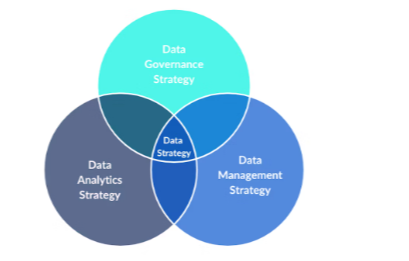
Performance dashboards and predictive analytics facilitate insights generation, while effective data governance and data storytelling underpin the development of data-centric strategies essential for organizational success.
Market Trend Analysis
While understanding market trends is essential for business longevity, organizations often struggle to translate these insights into actionable strategies.
Leveraging data visualization and predictive analytics enhances customer segmentation and competitive analysis.
Businesses must navigate market saturation by adhering to industry benchmarks while prioritizing user experience.
Effective data governance ensures informed decisions, empowering companies to adapt swiftly and thrive in a dynamic landscape.
Technology Integration Strategies
A comprehensive approach to technology integration is crucial for organizations seeking to enhance operational efficiency and drive innovation.
Cloud adoption, coupled with automation tools and robust integration frameworks, fosters seamless data pipelines and analytics platforms.
Prioritizing software interoperability and system scalability ensures technology alignment.
Additionally, investing in user training and process optimization empowers employees, ultimately transforming organizational capabilities and enhancing competitive advantage.
Case Studies and Real-World Applications
Case studies and real-world applications of business intelligence (BI) demonstrate the transformative potential of data-driven decision-making across various industries.
Success stories reveal how analytical frameworks enhance data utilization, leading to improved business outcomes.
Practical implementations in sectors like retail and healthcare showcase effective industry examples, highlighting the vital role of BI in fostering innovation and agility within organizations striving for growth and efficiency.
Conclusion
In the intricate tapestry of business intelligence, the insights derived from identifiers 610789585, 29886088, 343473302, 6152416772, 6317079660, and 621120731 illuminate pathways toward strategic growth. As organizations navigate the shifting sands of market dynamics, real-time reporting acts as a compass, guiding them through uncertainty. By embracing data governance and leveraging predictive analytics, businesses can not only adapt but flourish, transforming challenges into opportunities in this ever-evolving landscape of consumer behavior and market demands.


 By
By



 By
By